Problems I like to solve
Fraud and risk patterns
2,000+ fraud cases investigated across the US and Canada at Uber.
Escalation and judgment systems
Ran a global appeals queue of 5,000+ cases, and built TrustBridge on 82,779 real tickets.
Process and SOP design
A quality framework that cut process errors by about 40%, and training that sped up onboarding by 30%.
Strategic turnarounds
Diagnosed a $244M loss (Uber Eats India) and a $775M closure (Nordstrom Canada), then built the fix.
Sourcing and network design
Where something should come from and how it should move, weighed against cost, lead time, and risk.
Projects
TrustBridge
Calibrated Escalation & Empathy Framework for AI Customer Experience
Status: Live demo
Problem: AI support bots decide who handles a case and how it sounds from keywords and apology templates, so calm but risky cases slip through.
What I did:
- Scored emotional intensity, stakes, ambiguity, trajectory and resolution confidence separately.
- Set the escalation threshold per issue category, using signal detection theory.
- Replaced stacked apologies with one bounded acknowledgment, then action.
Scale: 82,779 real tickets modeled, five testable predictions defined, and a live dashboard.
Most AI support systems fail the same way twice: escalation decided by keyword matching, empathy decided by apology templates. TrustBridge reframes both as explicit, auditable judgment instead of pattern matching on surface features.
Key takeaway: Turns AI support escalation and empathy into explicit, testable judgment, modeled on 82,779 real tickets.
Focus: Signal detection theory, AI/CX systems design, Python, Real support data
- 82,779 real tickets modeled
- 2 layers escalation + empathy
- 5 testable predictions
Most AI customer service systems make the same mistake in two places: escalation decided by keyword matching, empathy decided by apology templates. Both treat a judgment problem as a classification problem on surface features.
TrustBridge reframes both decisions as explicit, auditable models, grounded in research rather than intuition.
Escalation as signal detection, not keyword matching
Signal detection theory, the framework built for radar operators deciding "real signal or noise," separates two things a keyword filter collapses into one: sensitivity (can the system actually tell a risky case from a normal one) and criterion (where it sets the threshold for saying "escalate"). A keyword filter has low sensitivity: "furious" is a weak proxy for real risk, and plenty of genuinely dangerous cases, quiet, cold, "I'm just going to leave," contain no trigger words at all. TrustBridge scores emotional intensity, stakes, ambiguity, trajectory, and resolution confidence independently, then combines them, with the escalation threshold set deliberately per issue category rather than left implicit.
Bounded empathy, not performed warmth
Recent research on AI chatbots found something counterintuitive: empathetic responses can worsen customer satisfaction. Customers hold AI to a different standard than humans, and stacked apologies read as performance, not care. TrustBridge's answer is bounded empathy: one specific, proportional acknowledgment, immediately followed by competent action, never fused with a compensation offer.
The unified model
| Low emotional intensity | High emotional intensity |
|---|
| Low risk / stakes | Handle automatically. Clarity is the whole job. | Handle automatically, with one bounded acknowledgment before resolution. |
|---|
| High risk / stakes | Escalate. A human leads. | Escalate, and bridge: a bounded, honest acknowledgment while the handoff happens. |
|---|
What this predicts
The framework makes five falsifiable predictions, tested against real support data (a 300 row Bitext chatbot sample, a support tickets dataset, and a CSAT dataset):
- A multi dimensional escalation score beats a keyword only baseline at a matched false alarm rate.
- Setting the threshold per issue category reduces misses on high stakes categories without raising overall false alarms.
- Responses that name the specific problem correlate with higher real CSAT than responses that lean on generic warmth alone.
- Stacked empathy markers score no better, or worse, on "sounds genuine" than a single bounded acknowledgment.
- Responses that separate the emotional line from a compensation offer score higher on trust than responses that fuse them.
View the live dashboard
Uber Eats India
Market Reentry Strategy, Foster School of Business
Problem: Uber Eats lost $244M in under three years chasing discounted orders and exited India in January 2020.
What I did:
- Started with business customers through Uber for Business.
- Combined a shared ride with one quick food pickup.
- Added an order ahead, pay in app, pick up on the way option.
Finding: Office orders average over 1,500 rupees against 250 for a single user. This is a plan, not a shipped result.
Uber Eats lost $244M in India in under three years chasing discounted orders it could not profitably deliver, and sold the business to Zomato in 2020. This plan re enters the market by building on assets Uber already owns instead of a new delivery network.
Key takeaway: Diagnosed a $244M loss and built a reentry plan from assets Uber already owns.
Focus: Strategic planning, Market reentry, Team project
Foster School of Business, Team Project
- $244M prior loss diagnosed
- 80% Swiggy + Zomato share
- 3 cost cutting strategies
Uber Eats launched in India in May 2017 to take over food delivery on the strength of Uber's global scale. It lost $244M in under three years and sold the business to Zomato in January 2020.
The failure came from chasing discounted orders without offering anything unique. A typical order runs 250 to 300 rupees, thinner than what it cost to pay the driver, so Uber Eats lost money on nearly every trip. Once the discounts stopped, customers returned to Swiggy and Zomato, who already held 80% of the market and the public's trust.
The reentry strategy
- Start with business customers. Launch inside Uber for Business instead of advertising for individual users. Office orders average over 1,500 rupees versus 250 for a single user, an instantly profitable ticket size, on a customer base that already trusts Uber for work travel.
- Share rides between passengers and food. A customer booking a shared Uber Moto or cab ride can route through one quick food pickup along the way. This raises driver hourly earnings and removes the need for a dedicated delivery workforce.
- The on the way takeaway option. Order ahead, pay in app, and grab food on the way home, no delivery fee, no 35 minute wait. Built for the price sensitive customer who wants speed without paying for delivery.
Who it serves
Students, early career professionals, and single person households: customers who already use food delivery often but stay underserved by high delivery and platform fees relative to a small, single meal order. This segment shows high repeat purchase potential the moment daily ordering becomes affordable.
Nordstrom Canada
Nordstrom 2.0, The Relaunch Strategy
Problem: Nordstrom Canada closed in 2023 after nine years and $775M, with no profitable year, while 53% of former customers were disappointed.
What I did:
- Diagnosed where the original strategy fell short.
- Rebuilt the strategy around Canadian life instead of imported U.S. habits.
- Set targets for margin, customer loyalty and Canadian designers.
Target: 12%+ EBITDA margin by year 3 and a Net Promoter Score of 65 to 80+. These are targets, not results.
Nordstrom Canada shut down in 2023 after nine years and $775M in parent funding, without a single profitable quarter. Yet over half of former customers were disappointed it closed. This plan rebuilds the strategy around four pillars, built for Canadian life instead of imported from the U.S.
Key takeaway: Diagnosed why Nordstrom Canada closed after $775M and designed a four pillar relaunch.
Focus: Strategic planning, Brand relaunch, Team project
Strategic Planning, Team 2
- $775M parent capital burned
- 0 profitable years, 2014 to 23
- 53% of customers disappointed it closed
Nordstrom Canada shut down in 2023 after nine years and $775M in parent funding, without a single profitable quarter. Yet 53% of former customers were genuinely disappointed it closed, and 56% brand awareness remained. The failure was strategic and operational, not a lack of demand.
Where the original strategy fell short
Nordstrom got the demand right: Canadians wanted premium fashion, the brand name traveled, and shoes and service delighted when delivered well. Where it fell short: Canada was treated as one market when Toronto, Vancouver, and Montreal differ in climate and shopping behavior; the U.S. supply chain meant 2 to 3 week restocks and empty shelves; awareness never reliably converted to customers; and the service model was inconsistent.
Four pillars for the relaunch
- Radical Localization. Right sized flagships (30 to 40k sq ft, not 100k+), local micro fulfilment centres in each flagship city for 2 day restock, climate smart buying, bilingual by default.
- The Wardrobe Architect. Free styling booked in app, same day alterations included for members, modular outerwear where one shell, liner, and merino layer covers three seasons.
- Zero Friction Commerce. RFID at ~99% inventory accuracy versus ~70% industry, one inventory truth across store, web, and warehouse, returns without a printer or a car, same day pickup.
- Canadian Designer Collective. A national platform for 50+ Canadian designers, from Mejuri and Kanuk to emerging Instagram first labels, with exclusive capsule collections and fair wholesale terms.
Who it targets
The "Unjoyed" shopper: a considered, convenience starved premium buyer, 28 to 55, $100K to $250K household income, who tolerates fragmented channels and hassle returns out of inertia rather than loyalty, and would switch for unified commerce, personalization, and a wardrobe that's actually solved.
Headline targets
- 12%+ EBITDA margin by year 3
- 65 to 80+ Net Promoter Score
- 50+ Canadian designers by year 2
Your whole wardrobe solved. Canadian, climate smart, and zero hassle.
HuskyPerks
Mobile Deals App for UW Students, Built with AI Assisted "Vibe Coding"
Status: Live app
Problem: UW students had plenty of deals but no easy way to find the ones nearby.
What I did:
- Collected 244 perks from UW's website and student resources and organized them into 15 categories.
- Built a campus map with distances, filters and one tap directions.
- Added a Perk Vault where online perks open in one tap and show which ID is needed.
Scale: 244 perks live, built solo in days. Early use: 69 visits in the 90 days to Oct 5, 91% on mobile.
The real problem for UW students hunting local deals was never a lack of them. It was poor coordination and clunky navigation. HuskyPerks fixes that: a mobile optimized web app curating verified local discounts exclusively for UW students, taken from concept to a working product in days using AI driven development tools.
Key takeaway: Took a student deals app from concept to a working product, solo, in days.
Focus: Vibe coding, Product design, UW students
- Solo concept to product
- Days not months
- UW only curated discounts
As a UW student constantly exploring local spots, the real issue was never a lack of deals. It was poor coordination and clunky navigation, especially when trying to find what was actually nearby.
HuskyPerks is a mobile optimized web app built specifically for University of Washington students, making campus perks visual and easy to explore.
How it came together
- Vibe Coded with Lovable. Used AI driven tools to go from concept to a smooth mobile interface fast, focusing on intuitive UX and clear data structure.
- UW Specific Data. Curated verified local discounts exclusively relevant to UW students.
- Ops Mindset. Approached it like an operations problem: fixing the mapping and coordination friction to build a clean web experience.
Vibe coding turned a real operational headache into a functional product in days.
The app is soooo great! I didn't know that UW students have so many discounts. UW student
Try HuskyPerks
Linear programming supply chain optimization dashboard
Status: In build
Work in progress.
KEY Electronics Mexico sourcing and warehousing case
SCM 512A
Parts: Sourcing, Warehousing
Articles
Published Sep 29, 2026, about 5 min read
TL;DR Bots already ask whether they can answer and whether they should. They skip a third question: can I actually do this, right now, in this conversation? Asking it before the bot replies sends the customer to a person on the first request, not after 10+.

 Hand block fabric painting
 Palm leaf painting
 Ceramic building
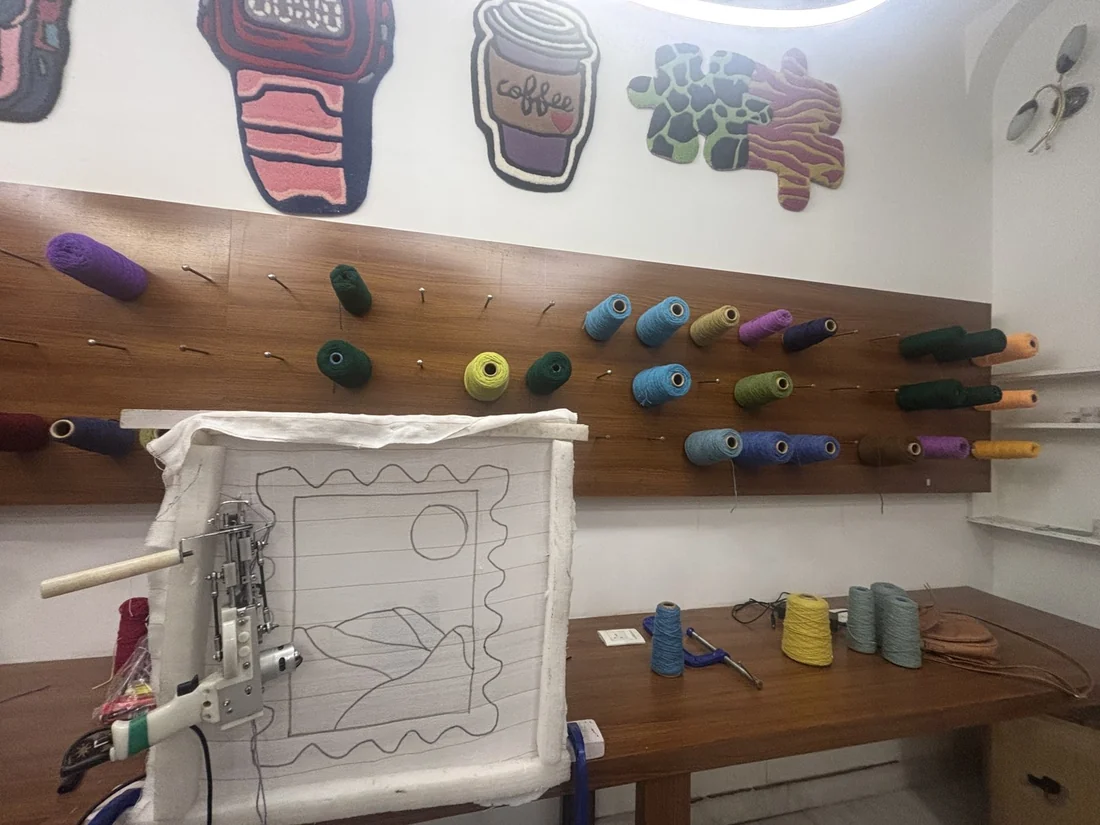 Tufting